
There are landscapes that command attention. That ask for no effort of interpretation, no learned guide to reveal their beauty. Cap Fréhel is one of them. Planted at the tip of the Côtes d’Armor, this promontory of schist and pink sandstone towers more than seventy metres above the sea. Ahead: the horizon. Behind: the continent almost disappears.
Classified as a Grand Site de France, Cap Fréhel protects one of the best-preserved coastal moors on the Atlantic seaboard. Heather, golden gorse, ferns — depending on the season, the palette changes, but the intensity remains. In summer, the saffron of the gorse explodes against the blue. In spring, the moor trembles gently in the north wind.
The cape is also home to a remarkable bird reserve: gannets, guillemots, shags and kittiwakes nest in the cliffs. An impressive seabird colony, visible from the paths running along the edge. You don’t have to be an amateur ornithologist to be struck by the spectacle — the mere presence of these thousands of birds in flight is an experience in itself.
And then there is the lighthouse. Rebuilt after the Second World War, it rises 32 metres above the rocks and remains one of the most powerful in France. Its square, massive silhouette contrasts with the delicacy of the surrounding landscape. The official Cap Fréhel website gives details of access to the lighthouse by season.
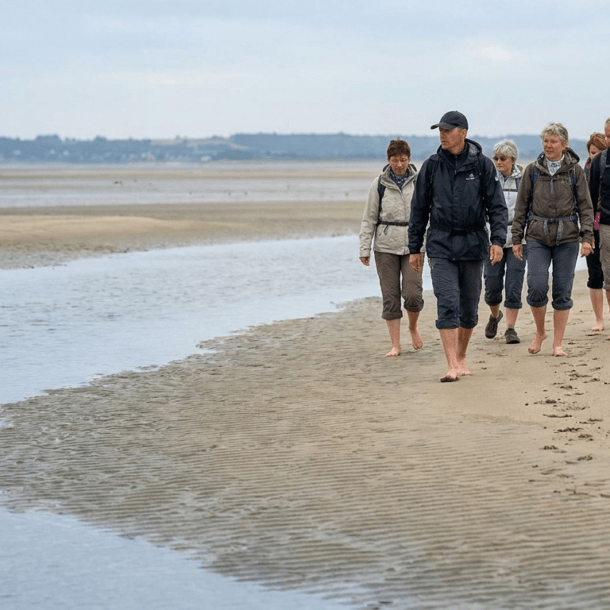
To fully grasp the scale of the site, you have to walk. The GR34 — customs officers’ path — runs along the cliffs with a precision that commands respect: you never stray far from the edge, you never lose sight of the sea. From the Cap car park, several loops are possible.
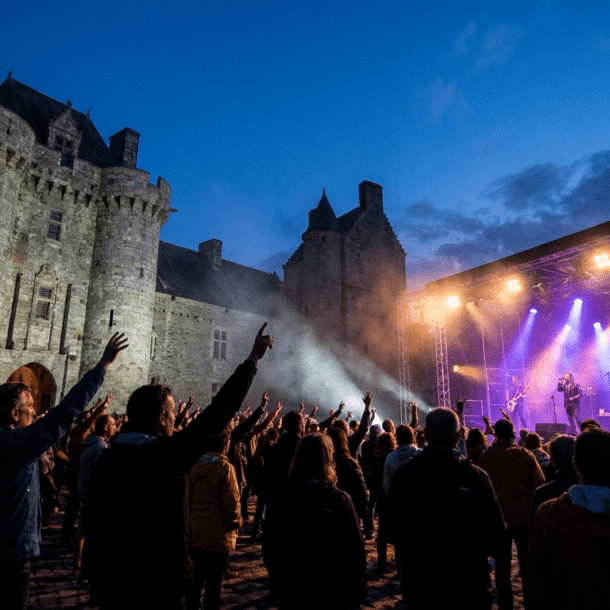
Fort La Latte deserves a special mention. This 14th-century fortress, reachable on foot from the cape or by car, overlooks a spectacular cove. It has served as the setting for several film shoots, including the famous Vikings. The interior can be visited, and the view from the towers gives a measure of what Breton lookouts must have felt, scanning the horizon to read the intentions of enemy fleets.
Cap Fréhel is about an hour’s drive from Combourg, via Lamballe or Plancoët. The route crosses quiet farmland hedgerows and a few discreet Breton villages — a journey without particular glamour, but one that makes the arrival all the more striking.
Planning the whole day is amply justified. The morning for the hike, the afternoon for the visit to Fort La Latte, and a few extra minutes of contemplation facing the sea before heading back. Bring waterproof shoes — even in fine weather, the damp of the moor leaves its traces — and an extra layer: the wind is rarely absent from the cape, whatever the season.
Back at the Hôtel du Château, a warm room and a carefully prepared dinner at the Atala bistro suddenly feel like a well-earned reward. Seasonal cooking, rooted in Breton terroir produce, is a natural continuation of a day spent in the heart of this exceptional coastline.